The mass timber technical conversation has shifted notably over the past several years. The dominant technical questions of the early adoption period — connection detailing for novel applications, fire engineering for performance-based design, code interpretation for prescriptive paths — have largely converged on standard practices. The technical question that has emerged as the dominant remaining challenge is moisture management.
This piece examines why moisture management is now the dominant question, what current best practices look like, and where the field engineering work most needs to develop.
Why moisture is the dominant remaining challenge
Mass timber assemblies have specific moisture-related vulnerabilities that distinguish them from conventional steel and concrete construction. Cross-laminated timber and glued laminated timber are organic materials whose dimensional stability, structural performance, and durability depend on maintained moisture content within specific ranges. Excessive moisture during construction or in service produces measurable consequences including dimensional movement, bond degradation in glued assemblies, and biological deterioration over longer time scales.
The moisture vulnerability is not catastrophic in the way fire vulnerability would be without appropriate engineering. It is operationally significant in ways that affect construction sequencing, building enclosure detailing, and long-term maintenance requirements. It is also less amenable to single-solution engineering responses than other technical challenges have been.
The field engineering response to moisture management has been more variable than the responses to other technical challenges. Some projects have developed sophisticated moisture management protocols that produce excellent outcomes. Others have produced significant moisture problems during construction or commissioning. The variation reflects the fact that effective moisture management requires sustained attention across multiple project phases rather than a single design decision.
The construction-phase moisture exposure problem
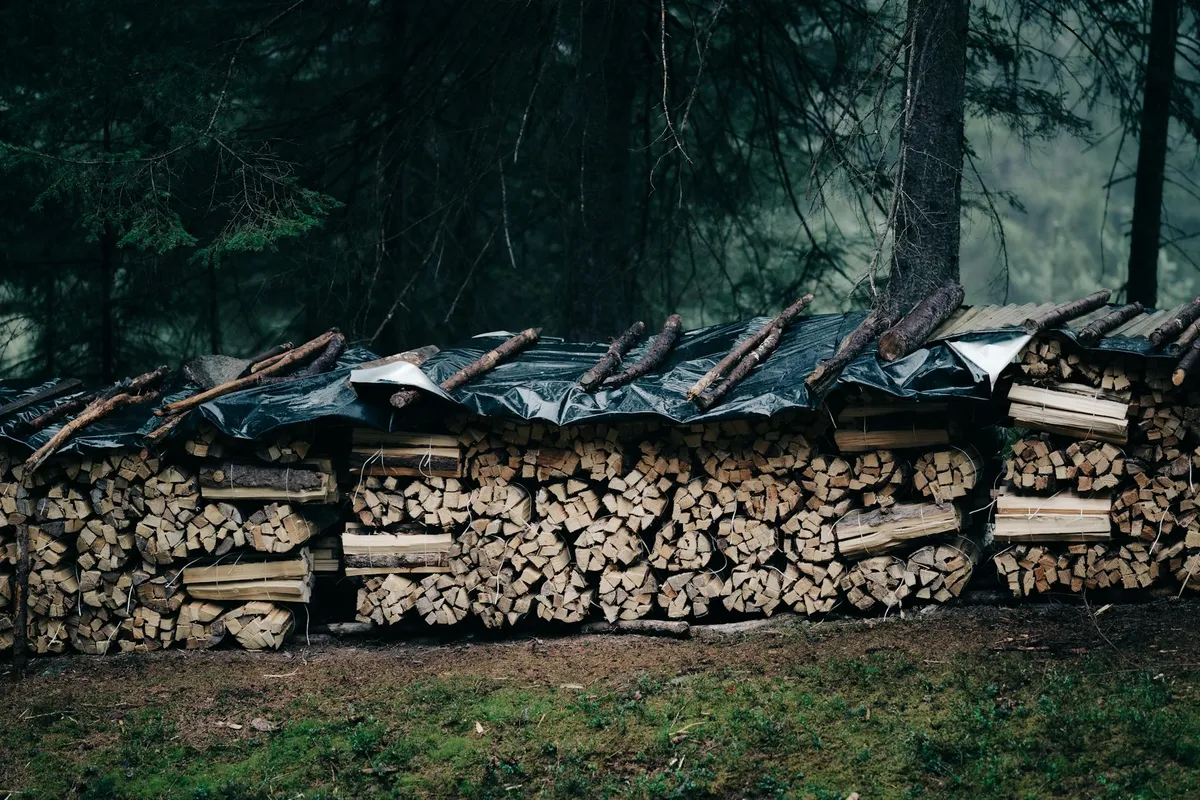
The most acute moisture management challenge is construction-phase exposure. Mass timber assemblies are typically installed before the building enclosure is completed. The exposed timber is subject to weather during the period between installation and enclosure closure.
The duration of exposure varies dramatically by project. Well-managed projects close the enclosure within days or weeks of timber installation through coordinated sequencing. Poorly managed projects leave significant timber surface area exposed for months. The cumulative moisture absorption during exposure varies correspondingly.
The current best practice involves several specific elements. Pre-installation surface treatments that reduce moisture absorption rates. Active drying protocols when timber moisture content exceeds target ranges before enclosure closure. Coordinated construction sequencing that minimizes the exposed period. Active monitoring of moisture content during the exposure period to identify problems before they become significant.
The cost of these protocols is meaningful but is generally far less than the cost of remediating moisture-related problems that emerge if protocols are inadequate. Projects that have invested in robust construction-phase moisture management have generally produced better outcomes than projects that have treated it as a secondary concern.
The enclosure-phase moisture management challenges
Once the building enclosure is closed, the moisture management challenge shifts from exposure to vapor and bulk water management within the assembly. The performance of the enclosure design determines the long-term moisture environment for the structural timber.
Mass timber assemblies are vapor-permeable in ways that some conventional structural systems are not. The enclosure design must account for this vapor permeability in determining where moisture can accumulate, how vapor drives interact with the assembly, and how drying potential is provided when moisture does accumulate.
The current best practice involves sophisticated hygrothermal analysis during design to verify that the assembly performance will produce sustainable moisture conditions across the expected climate range. The analysis tools available for this purpose have matured significantly over the past several years. Design teams that have integrated these tools into their standard practice produce better assembly designs than design teams that rely on conventional rules of thumb.
The in-service monitoring and maintenance question
The third moisture management dimension is in-service monitoring and maintenance. The structural timber will experience moisture variations across its service life. Some moisture variation is normal and should not raise concerns. Other moisture variation may indicate developing problems that warrant intervention.
The capability for in-service moisture monitoring has improved as instrumentation has become less expensive and more reliable. Projects that have included embedded moisture sensors in critical structural locations gain access to ongoing data that supports informed maintenance decisions. The cost of including this monitoring during construction is modest. The retrofit cost to add monitoring later is significantly higher.
The maintenance protocols for in-service moisture issues have not yet been standardized in the way maintenance protocols for steel or concrete buildings have been. The professional community is developing the operational knowledge as the building stock ages. Projects designed for ease of moisture-related maintenance access — including provisions for inspection of critical timber elements and for addressing localized moisture issues without major disassembly — will be better positioned for sustained performance.
The professional capability gap
The dominant practical challenge with mass timber moisture management is the variable level of professional capability across the design and construction community. Architects, engineers, and contractors who have specialized in timber construction have developed sophisticated moisture management practice. Professionals new to mass timber often have not yet developed equivalent practice.
The capability gap manifests in specific ways. Design teams sometimes specify moisture management approaches that are inadequate for the actual climate conditions. Contractors sometimes execute construction-phase moisture protocols inconsistently. Building operators sometimes interpret routine moisture variation as problems requiring intervention or sometimes miss developing problems that warrant attention.
The capability development across the broader professional community is happening but is slower than the pace of mass timber adoption. The result is that some current projects are likely to experience moisture problems that better professional capability would have prevented. The remediation work and lessons learned from these projects will contribute to the professional knowledge base over time.
What the field needs to develop
The field engineering work that would most benefit from continued development includes several specific areas.
Standardized construction-phase moisture management protocols that can be incorporated into project specifications without requiring custom development for each project.
Better performance prediction tools for novel enclosure assemblies that allow design teams to verify moisture performance before construction.
Standard maintenance protocols for in-service moisture issues that incorporate the operational knowledge that has been developing across the building stock.
Professional capability development across the broader architecture and engineering community to reduce the gap between specialist and non-specialist practice.
Field-validated case studies of moisture problems and their resolutions that the professional community can learn from collectively rather than independently rediscovering.
None of these are technically novel. All are operationally important. The work to develop them is being done in pieces across the industry but would benefit from more coordinated development.
What this implies for project decisions
For projects currently in design with mass timber options, the moisture management implications warrant explicit attention. Project teams should evaluate their professional capability for moisture management, plan for construction-phase protocols, design enclosure assemblies with hygrothermal analysis, and consider including in-service monitoring infrastructure.
The cost of these provisions is modest compared to overall project budgets. The risk reduction is meaningful. Projects that treat moisture management as an integral element of mass timber design and construction generally produce significantly better outcomes than projects that treat it as a secondary concern.
The field will continue to develop better practices and tools. Projects that build with current best practices and document outcomes contribute to the development of better future practices. The field engineering work on moisture management is the dominant ongoing technical question for mass timber and is likely to remain so for the foreseeable future.