The Moai statues of Rapa Nui (Easter Island) represent an unparalleled feat of ancient engineering and cultural expression. These monolithic human figures, carved by the Rapa Nui people between AD 1250 and 1500, stand as enduring symbols of a complex society that flourished and then faced significant ecological and social challenges. Understanding the Moai involves delving into their profound spiritual and social significance, the sophisticated carving and transport methods employed, and the historical trajectory that led to their eventual toppling and subsequent restoration. This detailed guide explores the core aspects of the Moai, providing context for their meaning, stylistic elements, historical placement, and key visual identifiers.
Meaning and Purpose of the Moai
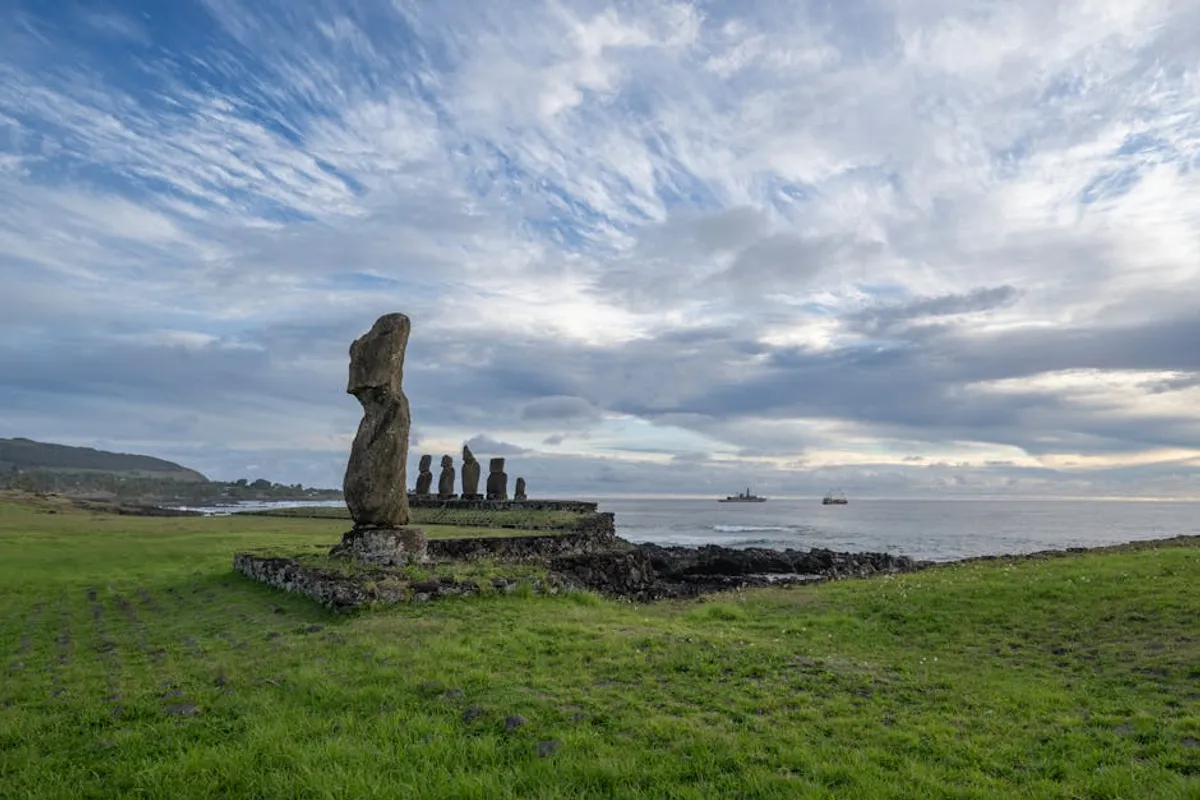
The primary function of the Moai was to embody the deified ancestors (aringa ora) of the Rapa Nui people. Each statue represented a specific ancestor, serving as a conduit between the living and the spiritual realm. These ancestral figures were believed to watch over the community, ensuring fertility, prosperity, and protection. Their placement on ceremonial platforms (ahu) along the coastline, typically facing inland, reinforced their role as guardians overseeing their descendants.
Beyond ancestral veneration, Moai also served as markers of tribal territory and status. The size and number of Moai constructed by a particular clan reflected its power, wealth, and access to resources. This competitive construction of increasingly larger statues likely contributed to the strain on the island’s limited resources. The statues were not merely decorative; they were integral to the social, political, and religious fabric of Rapa Nui society, embodying the collective identity and spiritual beliefs of the islanders.
Distinctive Style and Construction Techniques
The Moai exhibit a highly stylized and consistent aesthetic, characterized by elongated faces, prominent noses, deep-set eyes, and strong, angular jawlines. Their ears are often long with pendulous lobes, and their lips are thin, conveying a solemn, almost austere expression. While the bodies are typically truncated at the torso, some reveal arms carved in bas-relief, with hands resting on their abdomen, often pointing towards the navel. The backs of the statues frequently feature intricate carvings, including depictions of ceremonial belts and loincloths.
The vast majority of Moai were carved from the volcanic tuff found at the Rano Raraku quarry, a site that still holds hundreds of unfinished statues. Carvers used basalt hand adzes (toki) to chip away at the soft rock. Once carved, the statues were detached from the bedrock and moved to their final destinations. The exact methods of transport remain a subject of debate, but leading theories involve using ropes, rollers, and sledges, with teams of islanders "walking" the statues upright or moving them horizontally. The placement of a red scoria topknot, known as a pūkao, on the heads of some Moai occurred after the statues were erected on their ahu, adding another layer of complexity to their construction and symbolism.
Pro Tip: Many Moai were initially carved with pupil-less eyes. The white coral eyes, often with red scoria pupils, were inserted only after the statue was erected on its ahu during a special ceremony. This act was believed to "activate" the Moai, giving it spiritual power and allowing it to gaze over the community. Observing the presence or absence of these eye sockets can indicate whether a statue was fully consecrated.
Historical Context and Development
The construction of Moai began around AD 1250, reaching its peak during the 15th and early 16th centuries. This period coincided with a flourishing Rapa Nui society, characterized by a complex social hierarchy and abundant resources. The islanders developed sophisticated agricultural practices and a rich oral tradition.
However, by the late 16th and early 17th centuries, a severe decline in resources, primarily deforestation, led to ecological collapse and intense inter-tribal warfare. This period, known as the "Huri Moai" (Moai toppling), saw many statues deliberately pulled down by rival clans, often as acts of desecration and symbolic defeat. By the time European explorers arrived in the 18th century, many Moai lay face down, broken on their ahu. The last standing Moai were reportedly toppled by the mid-19th century.
Modern restoration efforts, beginning in the mid-20th century, have seen many Moai re-erected, particularly at significant sites like Ahu Tongariki, where 15 colossal statues now stand. These projects have not only preserved cultural heritage but also provided invaluable insights into the original construction techniques and the Rapa Nui people's ingenuity.
Visual Characteristics and Interpretations
A detailed visual assessment of Moai reveals several consistent features, yet also subtle variations that speak to individual carvers or specific clans. When examining a Moai, consider the following:
- Facial Features: The pronounced brow, elongated nose, and tight lips are standard. The presence of eye sockets, and whether they once held coral eyes, signifies activation.
- Body Posture: Most Moai are depicted from the torso up, with arms often carved in relief, hands resting on the stomach or hips.
- Size and Scale: Moai vary significantly in height, from a few feet to over 30 feet, with the largest known, Paro, standing 32.8 feet tall and weighing 82 tons. The sheer scale of these figures is a testament to the organizational capabilities of the Rapa Nui.
- Pūkao (Topknots): These red scoria cylinders, resembling hats or elaborate hairstyles, were placed on the heads of some Moai. Their presence suggests a later stage of construction and potentially higher status for the ancestor represented.
- Ahu (Platforms): The ceremonial platforms on which Moai stand are often elaborate structures, sometimes containing burial chambers. The orientation of the ahu and the Moai (generally facing inland) is crucial to understanding their protective role.
The visual impact of a Moai is not solely in its individual form but in its collective presence, particularly when viewed in groups on an ahu. Their silent, watchful gaze continues to evoke wonder and introspection, reflecting a powerful connection between humanity, ancestry, and the environment.
Understanding the Enduring Legacy
The Moai statues are more than just ancient carvings; they are a profound testament to human ingenuity, cultural resilience, and the delicate balance between society and its environment. Their creation reflects a period of great societal organization and spiritual depth, while their toppling serves as a stark reminder of the consequences of ecological strain and conflict. Today, the Moai stand as global icons, drawing visitors and researchers alike to Rapa Nui, prompting contemplation on history, art, and the enduring mysteries of human civilization.
Frequently Asked Questions About Moai Statues
Who carved the Moai statues?
The Moai were carved by the Rapa Nui people, the indigenous Polynesian inhabitants of Easter Island, between approximately AD 1250 and 1500.
What is the largest Moai ever created?
The largest Moai ever erected is called Paro, standing 32.8 feet (10 meters) tall and weighing 82 tons. An even larger, unfinished Moai remains in the Rano Raraku quarry, measuring 68 feet (21 meters) and estimated to weigh 270 tons.
Why were many Moai toppled?
Many Moai were deliberately toppled during a period of intense inter-tribal warfare and societal collapse on Rapa Nui, roughly between the late 16th and mid-19th centuries. This act, known as "Huri Moai," was often a way for rival clans to desecrate the ancestors of their enemies and demonstrate dominance.
Where are most of the Moai located?
The majority of Moai are located on Rapa Nui itself, either standing on their ceremonial platforms (ahu), lying toppled across the island, or still embedded in the Rano Raraku quarry where they were carved.